
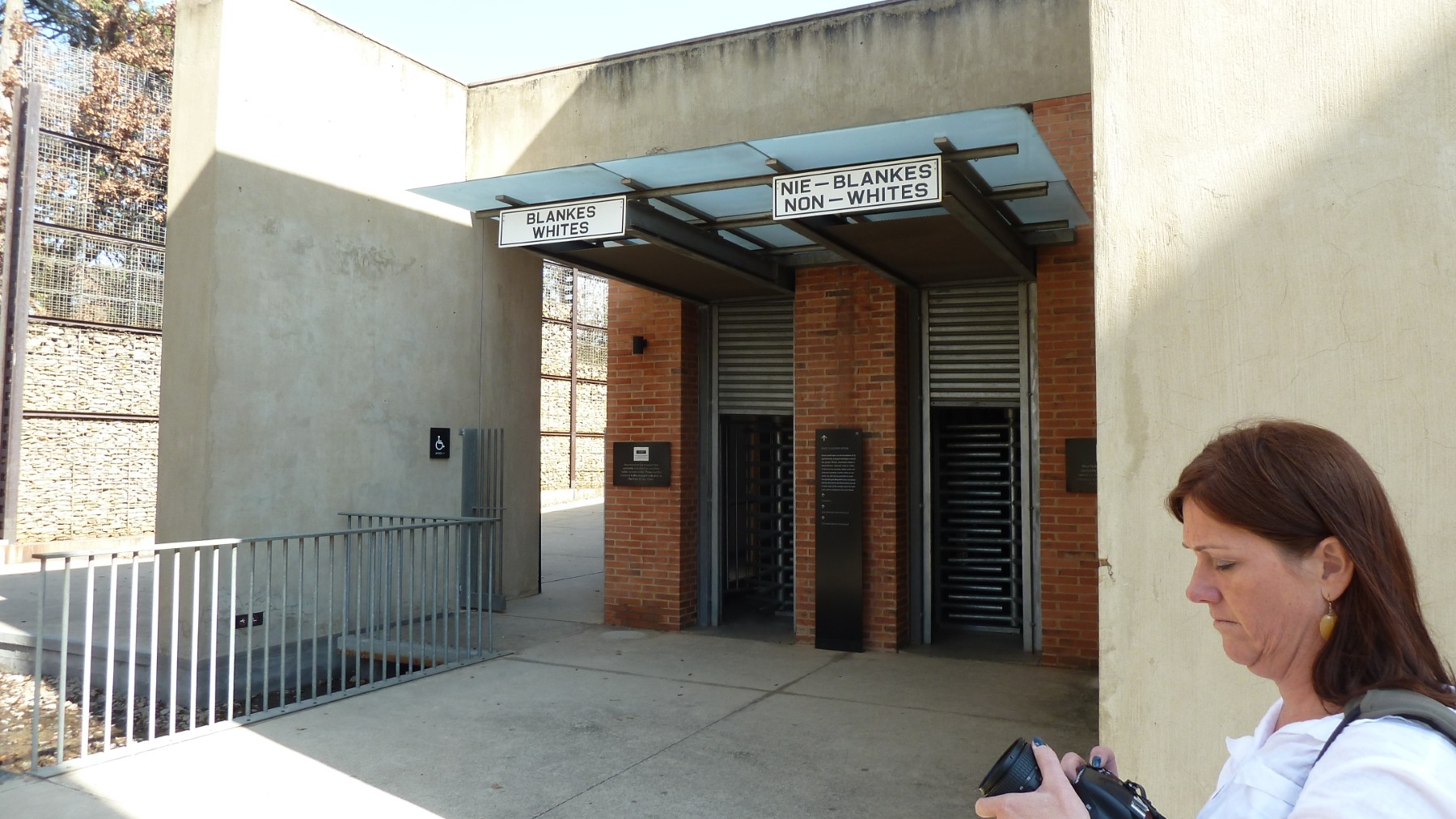
Our last day in South Africa found us with some time to spend in Johannesburg. After weighing our options, we decided that a day at the museum was warranted. Thus we spent the day at the Apartheid Museum, dedicated to the rise and fall of apartheid. (Some years later I visited the Holocaust Memorial Museum in Washington, DC. There I experienced many of the same emotions here.)
The history of South in the second half of the 20th century was dominated by the institutionalized system of apartheid - a policy of discrimination based on race. Imposed by the white minority from 1948 until 1994, it was characterized by laws that classified people by race and denied non-whites political, social, and economic rights. It also enforced separation in housing, education, and public spaces. It was finally dismantled through sustained internal resistance and growing international pressure. In 1994 it was declared ended with the election of Nelson Mandela as president.
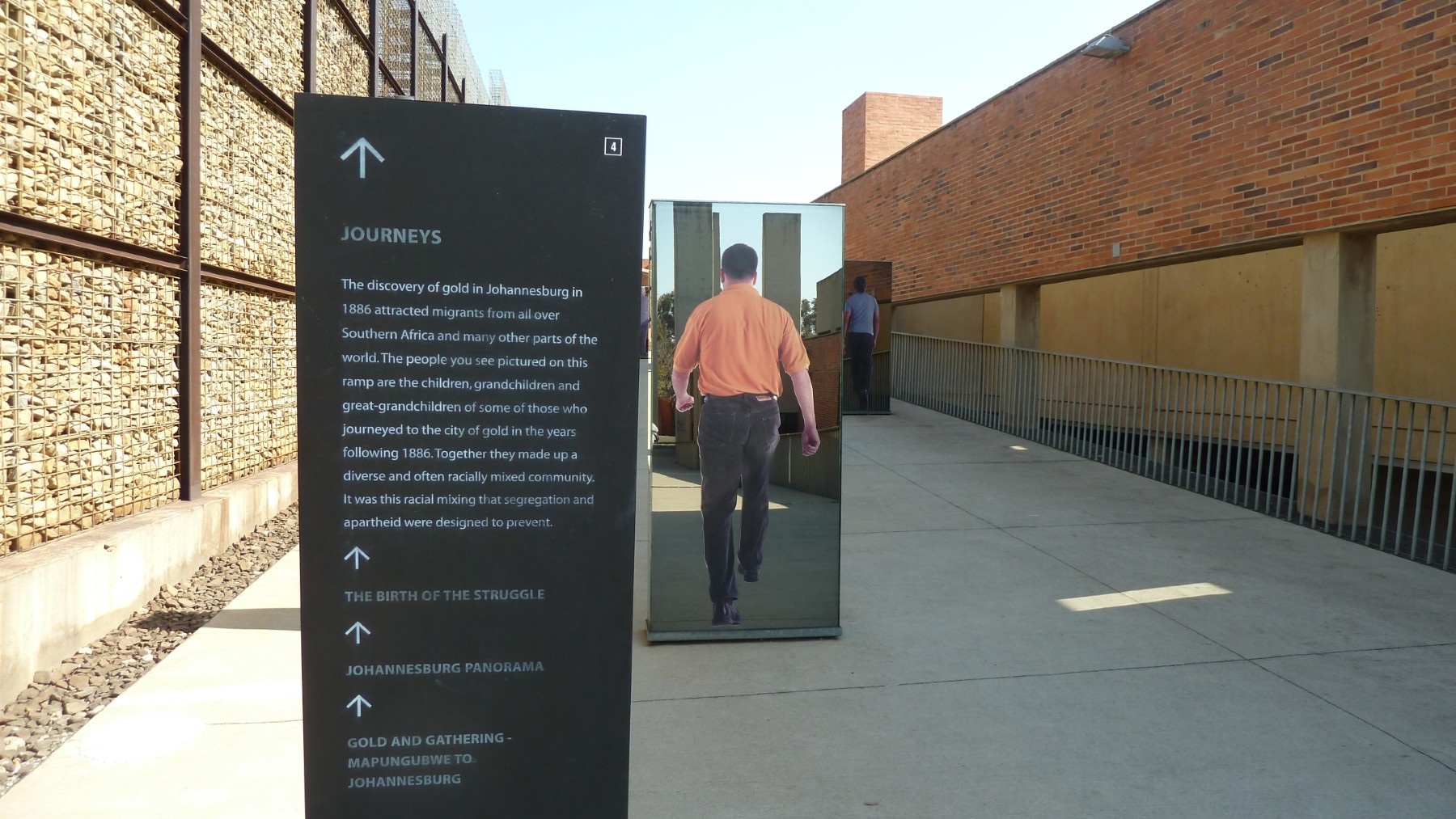
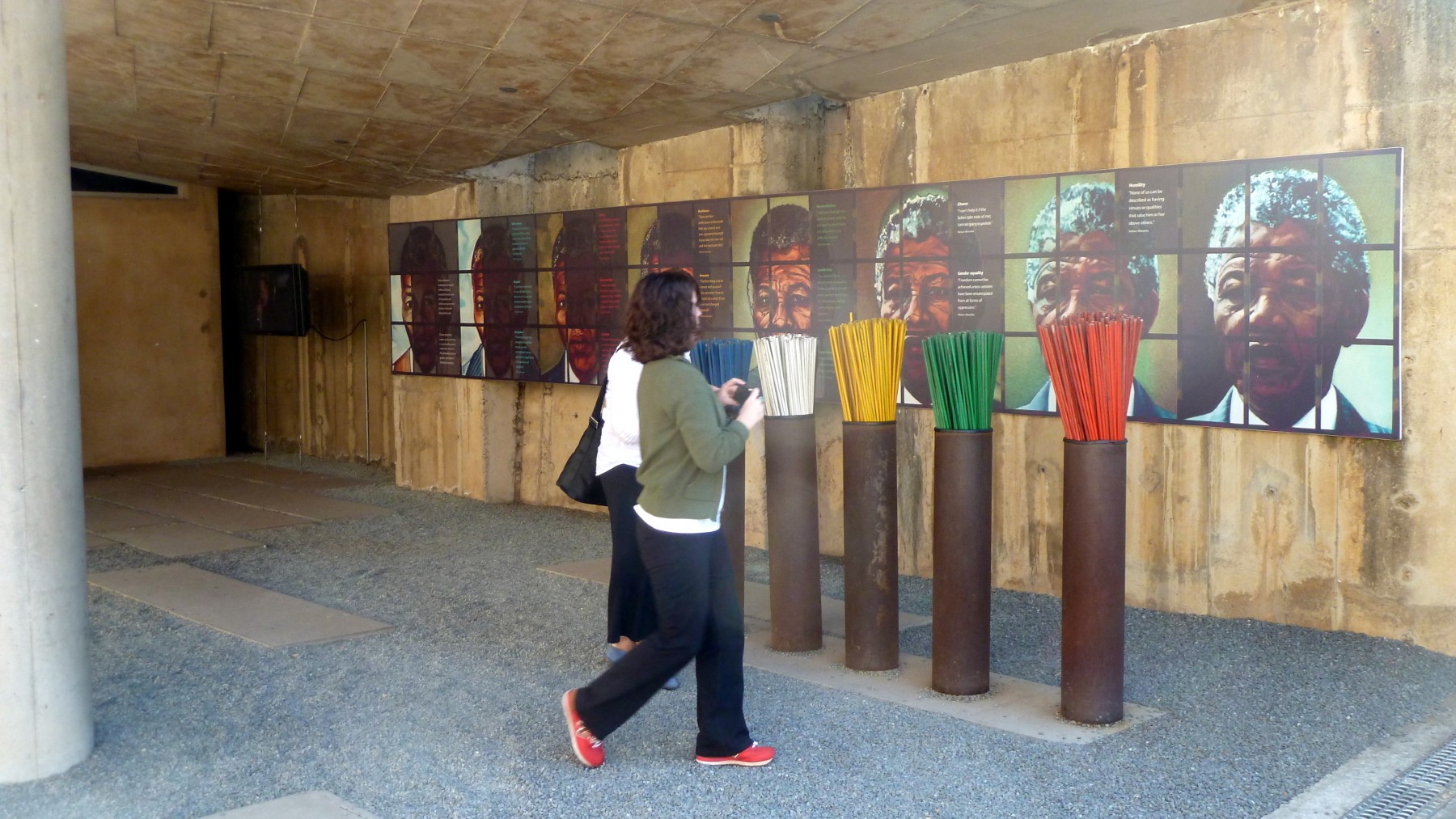
In 2001, the Apartheid Museum was opened in Johannesburg and presented both the rise and fall of South African apartheid. The museum consists for three major exhibits - the Pillars of the Constitution, Journeys and Segregation. The museum also includes presentation on the life of Nelson Mandela from his rural childhood, his activism against apartheid, his 27 years in prison and, finally, his role as South Africa's first democratically elected president.
 To The Journey to Johannesburg